
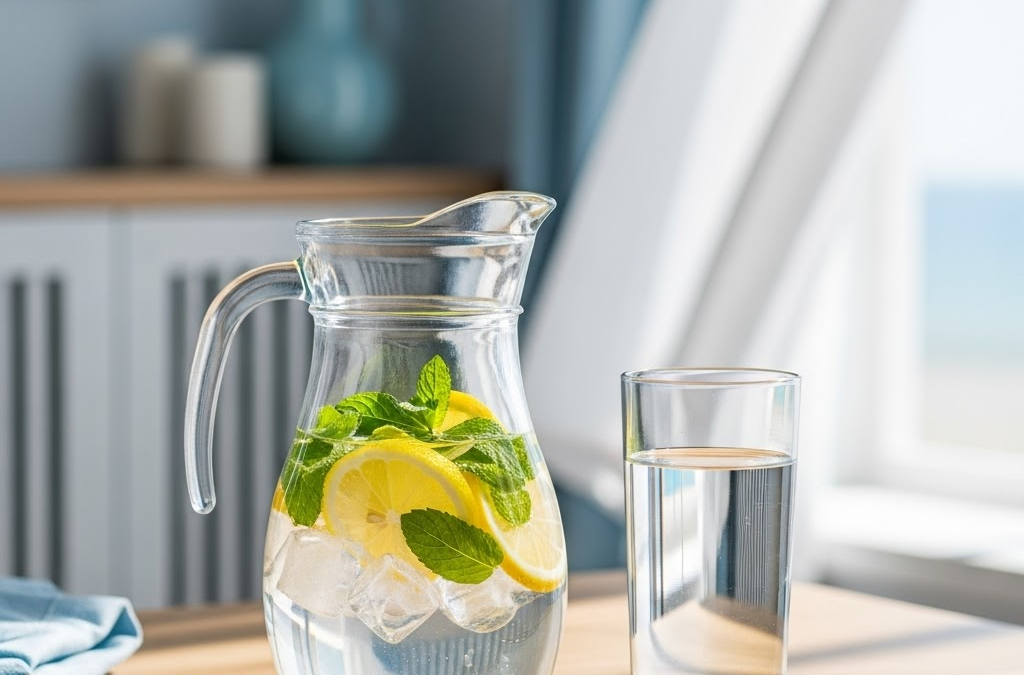
When the temperature rises, your body’s cooling system—sweating—goes into overdrive. Not always the most glamorous sprinkling system, but it is effective. While we often think of hydration as simply “drinking more water,” true cellular hydration is a complex balance of fluids and essential minerals.
1. The Electrolyte Equation
When you sweat, you aren’t just losing water; you’re losing electrolytes like sodium, potassium, and magnesium. These minerals are the “spark plugs” of your body, responsible for muscle contraction and nerve signaling.
- The Problem: Drinking excessive plain water without replacing electrolytes can lead to hyponatremia, where your blood sodium becomes too diluted. This can actually make you feel more fatigued and lead to muscle cramping.
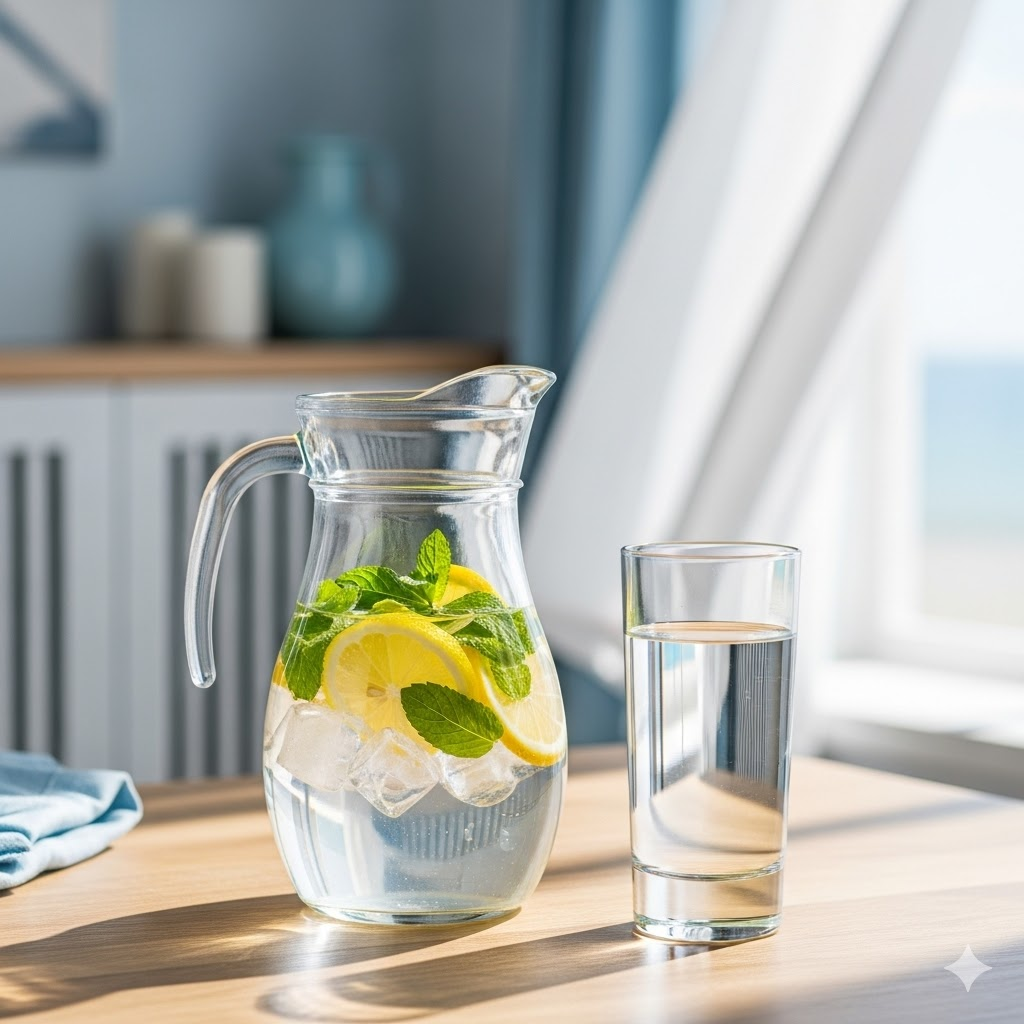
- The Solution: Focus on mineral-rich hydration. Adding a pinch of high-quality sea salt and a squeeze of lemon to your water, or consuming potassium-rich foods like bananas and coconut water, helps your body retain the water you drink.
2. Hydrating with Food
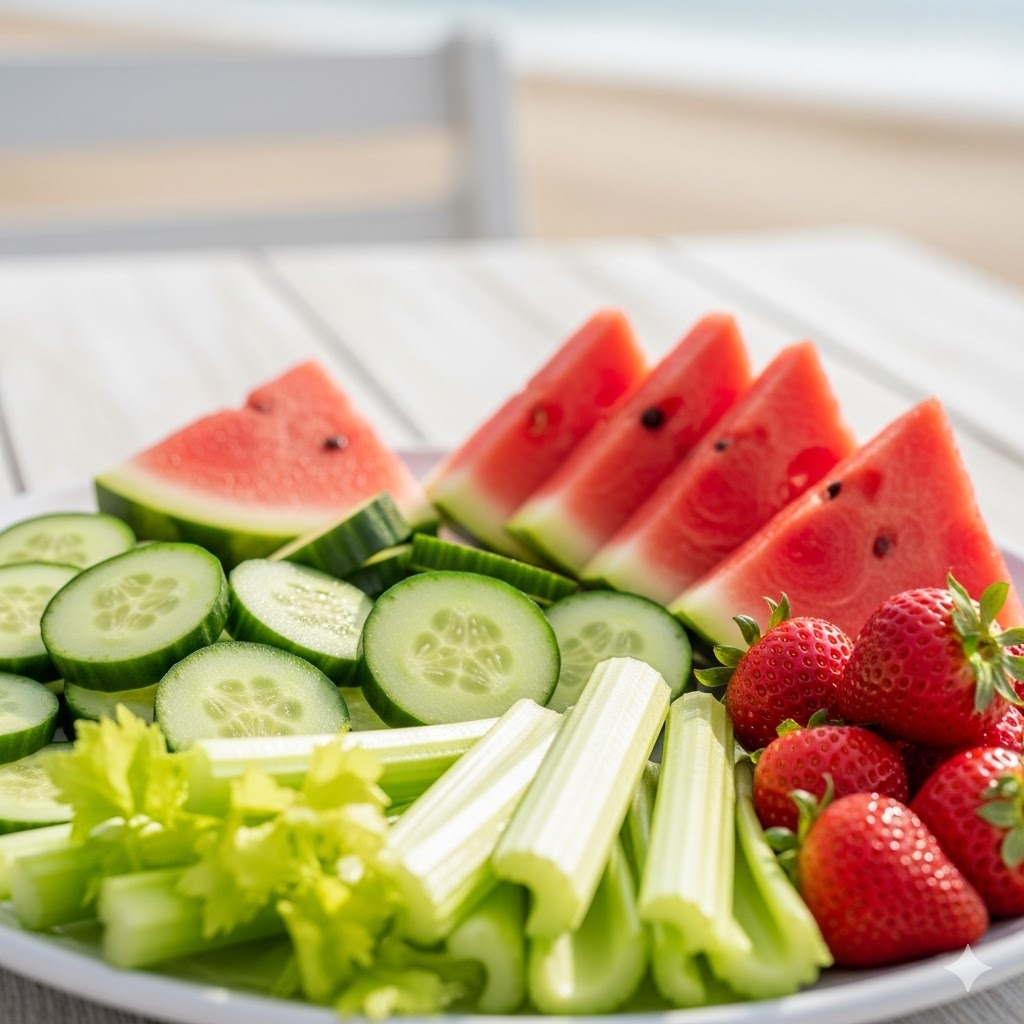
Hydration doesn’t just happen at the tap. About 20% of our fluid intake comes from the foods we eat. During a Victorian summer, nature provides exactly what we need. High-water-content foods like watermelon, cucumber, celery, and strawberries (all approximately 90-95% water) provide “structured water” that is absorbed more slowly by the body, offering a steady release of hydration.
3. Signs You’re Falling Behind
Don’t wait until you’re thirsty! Thirst is actually a late-stage signal of dehydration. Keep an eye out for these subtle red flags:
- Brain Fog: Even 1-2% dehydration can significantly impair cognitive function and concentration.
- Increased Heart Rate: Your heart has to work harder to pump a lower volume of (thicker) blood.
- Dark Urine: Aim for a pale straw color. Anything darker indicates your kidneys are working overtime to conserve fluid.
4. Practical Summer Tips for Active People
- Pre-Hydrate: If you’re heading out for a beach run or a Pilates session, drink 500ml of water 2 hours before you start.
- The “Gulp” Rule: Your body can only absorb about 200-250ml of water every 15-20 minutes. Small, frequent sips are more effective than “chugging” a liter once an hour.
- Check Your Caffeine: While moderate coffee intake is fine, caffeine is a mild diuretic. For every cup of coffee, try to add an extra glass of water to your daily total.
The Bottom Line
Hydration is the “groundwork” for every physical process in your body. By staying ahead of your fluid and mineral needs, you’ll not only move better but recover faster, allowing you to make the most of every sun-drenched day.
Looking for a personalised nutrition plan to support your summer goals? Book a consult with our team today!